
Technology can help you run a workout from your living room, track every step you take, and remind you to stand up. Yet that same technology can also keep you sitting for hours without noticing. That contradiction is at the heart of how technology has affected people’s activity levels.
Modern technology has removed physical effort from many everyday tasks while making planned exercise easier to access. Cars replace walking, automation reduces physical work, and screens create more opportunities to sit. At the same time, fitness trackers, workout apps, smartwatches, and online communities can encourage people to move more.
The result is not simply that technology makes people less active. It has changed where, when, and why people move.
How Technology Has Affected People’s Activity Levels
The biggest change is that technology has reduced many forms of incidental physical activity—the movement that happens naturally while working, traveling, shopping, doing chores, or completing everyday tasks.
- Computers have replaced some physically demanding work.
- Cars and ride services have reduced the need to walk.
- Household appliances have made chores less physically demanding.
- Streaming, gaming, and social media have increased opportunities for sedentary entertainment.
- Fitness technology has made exercise easier to plan, track, and personalize.
Most discussions of this topic stop at screen time. The quieter shift is what happened to the movement nobody ever planned in the first place—the walking, lifting, carrying, and standing that used to be built into an ordinary day and simply disappeared without anyone deciding to give it up.
This distinction matters because physical activity is not limited to formal exercise. Someone can spend an hour exercising and still spend most of the remaining day sitting. Conversely, someone who rarely goes to a gym may accumulate substantial movement through walking, household tasks, commuting, and an active job.
The Three Ways Technology Changes Physical Activity
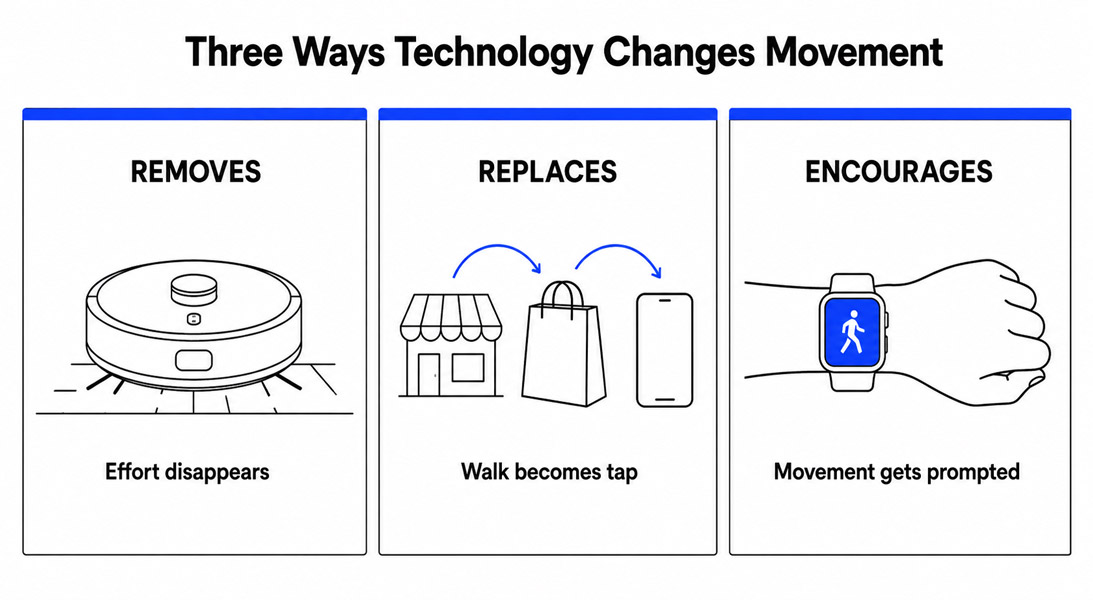
1. Technology removes physical movement
Automation is designed to reduce effort. That is useful, but less effort can also mean less movement. A washing machine, robotic vacuum, automated checkout, or software system can eliminate physical tasks that once required people to move.
2. Technology replaces movement
Sometimes technology does not simply remove an activity—it substitutes one behavior for another. A short walk to a store can become an online order. A trip across town can become a video call. Shopping in person can become home delivery.
Think about the last time you needed one small item and ordered it instead of walking to get it. Each individual substitution may seem insignificant. Across an entire day, however, repeated substitutions can remove many small opportunities to move.
3. Technology encourages movement
Technology can also work in the opposite direction. A smartwatch can remind someone to stand, a fitness app can provide a guided workout, and a step challenge can turn walking into a measurable goal.
This is why the effect of technology depends heavily on how it is used. The same smartphone that encourages hours of scrolling can also provide a walking route, workout plan, or activity reminder.
How Technology Has Reduced Everyday Movement
Technology and sedentary jobs
Computers have transformed work, but many digital jobs require people to remain at a desk for long periods. Email, messaging, software, and video meetings allow tasks to be completed without walking between offices, handling physical materials, or performing manual work.
Remote work can reduce movement even further by removing the commute and much of the walking associated with a traditional workplace. In practice, the movement that disappears first is rarely the workout—it is the ten-minute walk to a meeting room, the trip to a colleague’s desk, and the walk to lunch.
Technology and transportation
Transportation technology has made it possible to travel farther with less physical effort. Cars, ride-hailing services, and other convenient transportation options can replace short walks or bicycle trips.
Technology-enabled delivery services can also remove the need to travel to a store or restaurant. Convenience is valuable, but every replaced trip can also represent a missed opportunity for everyday movement.
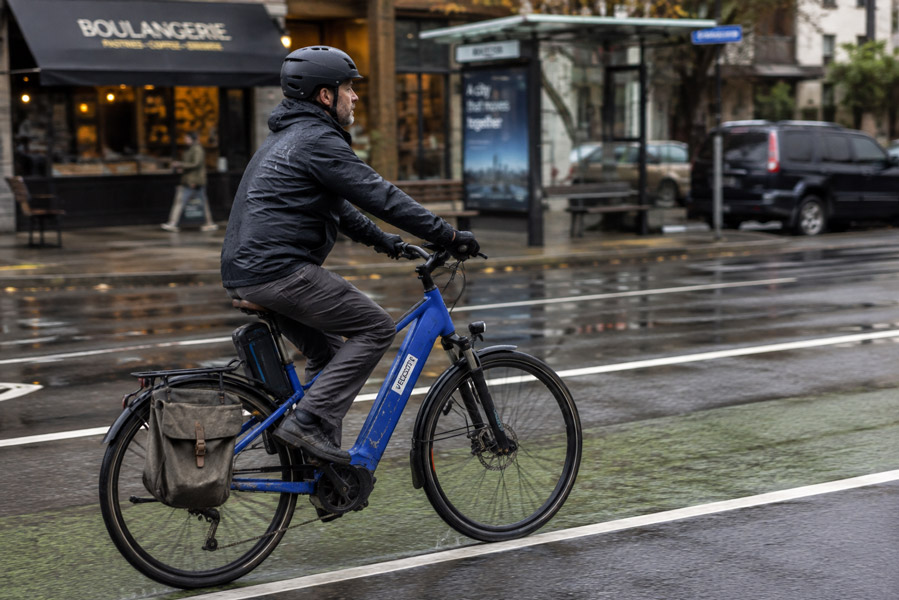
Not all transport technology pulls in the same direction, though. Assisted options such as e-bikes and electric scooters sit somewhere in the middle: they reduce effort compared with pedaling or walking, yet they generally involve more movement than sitting in a vehicle for the same journey. What matters is which choice the technology is actually replacing.
Technology and household chores
Modern appliances have dramatically reduced the physical effort required for many household tasks. Washing machines, dishwashers, vacuum cleaners, and robotic cleaning devices save time and energy.
That is generally a positive development. The important point is simply that physical activity has moved from being built into some daily chores to being something people may need to schedule deliberately.
Technology and entertainment
Entertainment has become increasingly screen-based. Streaming platforms, video games, smartphones, and social media can occupy hours that might previously have involved outdoor play, walking, or other physical activities.
There is also a knock-on effect that is easy to miss. Screen-based entertainment tends to keep the mind busy while the body stays still, and late-night use can shorten or disrupt sleep. Tiredness the next day usually means less movement, which makes the pattern self-reinforcing.
The issue is not any single screen session. The larger concern is when screen-based activities repeatedly replace movement throughout the day.
Everyday Movement vs. Exercise: Why the Difference Matters
One of the easiest mistakes is to treat physical activity and exercise as the same thing.
| Everyday movement | Planned exercise |
|---|---|
| Walking during errands | Running |
| Climbing stairs | Strength training |
| Household chores | Cycling workouts |
| Moving around at work | Fitness classes |
Technology can reduce everyday movement while making planned exercise more convenient. Someone might use a fitness app for a structured workout but spend the rest of the day sitting at a computer.
That is why asking only, “Do you exercise?” does not fully describe a person’s activity level. A more useful question is how much of the day is spent moving at all.
How Technology Can Increase Physical Activity
Fitness trackers and smartwatches
Wearable devices make movement visible. Step counts, activity goals, workout records, and movement reminders can turn something abstract into something measurable. Newer devices go further, using activity, sleep, and recovery data to suggest when to push and when to ease off.
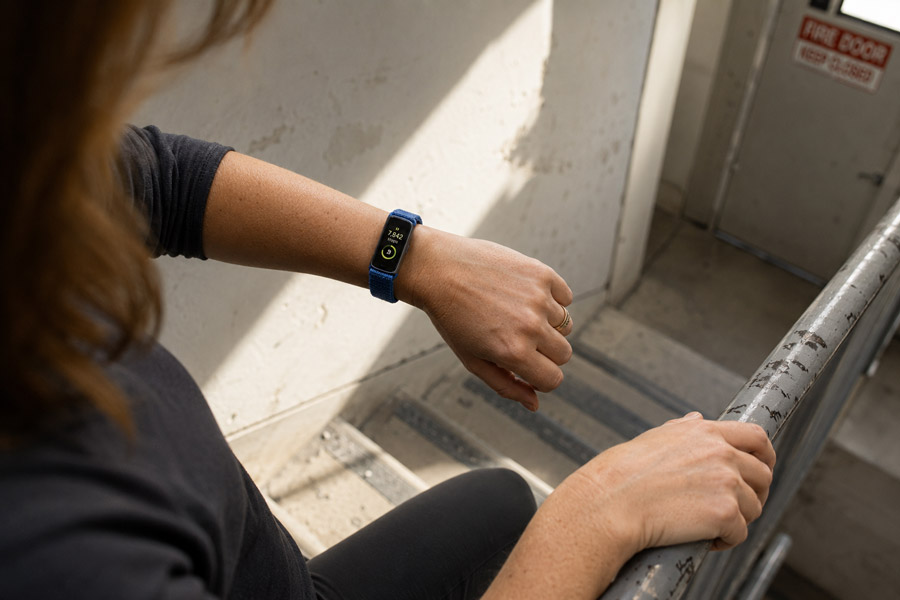
For some people, that feedback creates a useful prompt to take a walk or break up a long period of sitting. For others, it becomes a stream of data they check but never act on—tracking movement is not the same as doing it. It is also worth remembering that these devices hold detailed health information, so it makes sense to secure the connected account properly, including enabling two-factor authentication on health and fitness accounts.
Fitness apps and online workouts
Digital workout platforms remove several barriers to exercise. People can follow guided sessions at home, choose workouts that match their ability, and exercise on schedules that may not fit a traditional gym. Many now adapt the plan as they learn what you can sustain, which tends to help beginners stick with a routine longer than a fixed program would.
Online communities and gamification
Challenges, leaderboards, streaks, shared goals, and virtual communities can add accountability and motivation. Motion-based games and virtual reality workouts push this further by making the movement itself the entertainment. Technology can therefore make physical activity more engaging rather than simply more convenient.
Does Technology Always Reduce Physical Activity?
No. That is one of the most important points to understand.
Technology changes behavior, but the direction of that change depends on the technology and how it is used. Consider these examples:
- Smartphone: scrolling can encourage sitting, while a walking app can encourage movement.
- Smartwatch: notifications can create distraction, while activity reminders can encourage movement.
- Internet: streaming can increase sedentary time, while online fitness classes can support exercise.
- Automation: it can remove physical work, while automated tracking can help people build healthier routines.
This creates a technology paradox: the same digital environment can reduce incidental movement while making deliberate exercise easier. The difference usually comes down to defaults. Sedentary options tend to happen automatically, while active ones generally have to be chosen.
How Technology Has Changed Activity Throughout the Day
Technology’s influence becomes clearer when viewed as a complete daily pattern.
- Work: Computers and automation can reduce physical tasks and increase sitting.
- Transportation: Cars and digital delivery services can reduce walking.
- Home: Appliances and smart devices reduce physical effort.
- Leisure: Streaming, gaming, and social media can increase sedentary time.
- Exercise: Apps, wearables, and online programs can make planned activity easier.
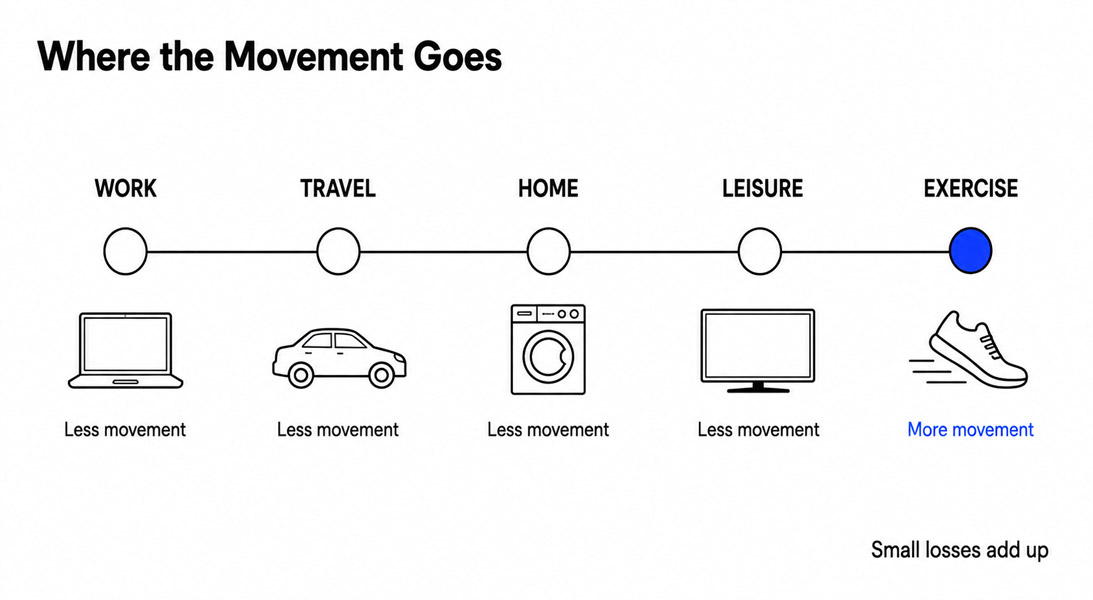
The important change is therefore cumulative. Technology can remove small movements from several parts of the day, even if no single technology seems especially significant.
Who Is Most Affected?
Children and teenagers
Digital entertainment can compete with outdoor play and other active pursuits. At the same time, technology can support activity through movement-based games, sports tools, and age-appropriate fitness programs.
Office and remote workers
People whose work is primarily computer-based may spend much of the day sitting. Remote workers can lose additional movement associated with commuting and moving around a workplace.
People with physically demanding jobs
Automation can reduce the physical demands of some occupations. This can improve safety and reduce unnecessary strain, while also changing how much movement workers get during a normal shift.
Older adults
Technology can reduce the effort needed for everyday tasks, but digital tools can also provide accessible exercise guidance, activity tracking, and reminders that support regular movement. For anyone rebuilding a routine after illness or injury, that guidance often matters more than the tracking does.
Common Misconceptions About Technology and Activity
“If I exercise, sitting all day does not matter.”
Planned exercise and everyday movement are different. A workout is valuable, but it does not turn an otherwise sedentary day into an active one.
“Technology always makes people less active.”
Technology can remove movement, but it can also create opportunities to exercise. Its effect depends on the behavior it encourages or replaces.
“Screen time is the only reason activity has changed.”
Screen use is only one factor. Transportation, workplace technology, automation, online shopping, delivery services, and household appliances can all change how much people move.
“More technology automatically means worse health.”
The more useful question is what the technology is replacing. Replacing a long manual task may be beneficial, while replacing a short walk with a digital convenience may reduce an easy opportunity for movement.
How to Use Technology to Become More Active
- Use movement reminders. Set alerts that encourage regular breaks from prolonged sitting.
- Track your activity. Use a smartwatch or phone to notice patterns in your daily movement—especially the days that feel busy but involve very little walking.
- Use fitness apps. Choose guided workouts that make exercise easier to start and maintain. Because these apps store personal health data, it is worth setting them up with a strong password you can actually remember rather than reusing an old one.
- Add movement to digital work. Walk during phone calls or use walking meetings when practical.
- Reduce unnecessary sedentary screen time. Take regular breaks from recreational scrolling, gaming, and streaming.
- Protect short opportunities to move. When practical, walk for nearby errands instead of automatically choosing the most convenient option.
The goal is not to eliminate technology. It is to prevent convenience from automatically deciding how much you move.
A Simple Way to Judge Technology’s Effect on Activity
When considering any technology, ask four questions:
- Does it remove physical effort?
- Does it replace an activity that required movement?
- Does it encourage or enable physical activity?
- Does it increase the amount of time I spend sitting?
These questions can reveal the real impact of technology more effectively than labeling a device as simply “good” or “bad.” Most tools will score in more than one direction, and that is exactly the point.
Frequently Asked Questions
How has technology affected people’s activity levels?
Technology has reduced many forms of everyday movement through automation, sedentary work, transportation, and screen-based entertainment. However, fitness apps, wearables, and online workouts can also encourage planned physical activity.
Does technology reduce physical activity?
Some technologies reduce physical activity by removing or replacing movement, while others encourage it. The overall effect depends on how technology changes daily behavior.
How does screen time affect physical activity?
Long periods of recreational screen use can replace activities that involve movement and contribute to more sitting. Late-night use can also affect sleep quality, which tends to reduce movement the following day. The effect depends on what screen-based activity replaces.
Can fitness technology help people become more active?
Yes. Fitness trackers, smartwatches, apps, and online programs can provide goals, feedback, reminders, guidance, and accountability that encourage physical activity. They work best when the data leads to a change in routine rather than just a habit of checking.
Does remote work reduce physical activity?
It can. Working from home may remove commuting and other workplace movement, although people can deliberately add walking, standing, and exercise breaks to compensate for some of that lost movement.
Key Takeaway
Technology has not simply made people more or less active. It has changed the way physical activity happens.
It has removed movement from many everyday tasks, replaced some physical activities with digital conveniences, and created new ways to exercise. The biggest risk is allowing convenience and screen-based habits to remove movement without replacing it.
Rejecting technology was never a realistic answer, and it is not the useful one either. The better approach is deliberate: let technology strip out the effort that serves no purpose, and use the same technology to defend the movement your body still needs. The convenience is not the problem. Letting it choose for you is.